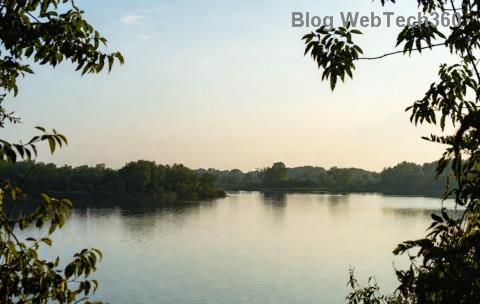
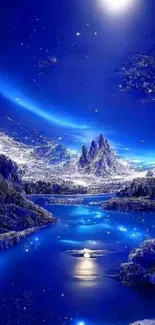
Transform Your Desktop: The Ultimate Guide To Windows Live Nature Wallpapers
Have you ever stared at your computer screen and felt like your digital workspace was missing a breath of fresh air? What if your desktop could transport you to a serene forest, a cascading waterfall, or a sun-drenched meadow with every click? Welcome to the world of Windows live nature wallpapers, where static images are replaced by dynamic, moving scenes that breathe life into your monitor. This isn't just about aesthetics; it's about transforming the very interface of your digital life into a source of calm, inspiration, and subtle engagement. In this comprehensive guide, we'll explore everything from the science behind their appeal to the practical steps for setting them up, ensuring you can curate a personalized, living backdrop that enhances your daily computing experience.
The concept of a "live" wallpaper moves beyond the traditional, unchanging JPG or PNG file. It leverages animations, subtle video loops, or interactive elements to create a sense of depth and realism. Imagine dew slowly dripping from a leaf, clouds drifting lazily across a mountain sky, or fish swimming peacefully in a virtual aquarium—all rendered in stunning high definition right on your desktop. This technology taps into our innate connection to the natural world, a principle known as biophilia, and brings it directly to the place where we spend countless hours working, creating, and connecting. As we delve deeper, you'll discover how these dynamic backgrounds are more than a novelty; they are a tool for mental well-being and a testament to the personalization capabilities of modern operating systems.
This guide will serve as your complete roadmap. We'll start by examining the powerful impact these wallpapers can have on your mood and productivity. Then, we'll navigate the diverse ecosystem of available live wallpapers, from simple animations to complex interactive scenes. You'll receive clear, step-by-step instructions for enabling them on your Windows 10 or 11 PC, along with a curated list of the best sources—both free and premium—to find breathtaking content. We'll also tackle practical considerations like system performance and battery life, and we'll look ahead to the exciting future of this technology. By the end, you'll be fully equipped to turn your desktop into a window to the world.
The Magic of Moving Mountains and Flowing Rivers: Understanding Dynamic Desktop Beauty
At its core, a live nature wallpaper is a piece of software or a video file set to loop seamlessly as your desktop background. Unlike a static photograph, which captures a single, frozen moment, a live wallpaper introduces the dimension of time. This motion can be incredibly subtle—perhaps just a gentle sway of grass in the wind or the flicker of a candle flame—or more pronounced, like a full-screen video of ocean waves crashing on a shore. The technical execution varies: some are lightweight, scripted animations (often in .webm or .gif formats), while others are high-bitrate video loops (like .mp4 files) that require slightly more system resources to decode and display smoothly.
The visual impact of this subtle motion is profound. Our brains are wired to notice movement; it commands attention. A well-crafted live wallpaper doesn't distract but rather provides a soft, peripheral dynamism that makes the digital environment feel less sterile and more organic. It breaks the monotony of a still image, adding a layer of realism that can make a virtual space feel inhabited and alive. Think of the difference between a painting of a forest and a window looking out onto an actual forest. The latter provides a continuous, gentle narrative—a bird might fly by, a leaf might fall—that our subconscious engages with in a positive, non-intrusive way. This is the first key to their appeal: they simulate a connection to a living environment directly from your desk.
More Than Just Eye Candy: The Science of Stress Reduction and Focus
The decision to use a live nature wallpaper is often driven by beauty, but its benefits are rooted in solid environmental psychology. Numerous studies have demonstrated the positive effects of exposure to nature, even in simulated forms, on human mental health and cognitive function. This is the essence of the biophilia hypothesis, which suggests that humans have an innate tendency to seek connections with nature and other forms of life. When we bring elements of nature into our built environments—our homes, offices, and now our desktops—we tap into this deep-seated affinity.
A landmark study published in the Journal of Environmental Psychology found that even brief views of natural scenes could significantly reduce stress and improve mood. Participants who looked at nature images showed faster recovery from stressful tasks compared to those viewing urban scenes. Now, imagine amplifying that effect with gentle motion. The soft flow of a river or the sway of trees in a live wallpaper can provide a form of micro-restoration. It offers a momentary mental break without you having to physically leave your chair. This "soft fascination" allows the brain's directed attention mechanisms to rest, reducing mental fatigue.
Furthermore, the right nature scene can enhance focus and productivity. Research on Attention Restoration Theory (ART) posits that natural environments engage our "involuntary attention," which gives our "directed attention" (the focus we use for demanding tasks) a chance to replenish. A live wallpaper depicting a calm, open landscape or a gentle stream can serve as this restorative backdrop. It occupies just enough of our peripheral awareness to prevent the mind from wandering into stressful or anxious thoughts, thereby creating a more conducive mental atmosphere for deep work. In practical terms, users often report feeling less drained at the end of a long screen-based workday when their environment incorporates natural elements.
A World of Options: Types of Live Nature Wallpapers Explained
The category of "live nature wallpaper" encompasses a surprisingly wide range of formats and functionalities. Understanding these types is crucial for selecting the one that best fits your taste and your PC's capabilities. They generally fall into three main categories: Animated Scenes, Interactive Wallpapers, and Video Loops.
Animated Scenes are typically lightweight, software-driven wallpapers. They are often created using rendering engines or code (like HTML5, WebGL, or dedicated application frameworks) to generate smooth, looping animations. The beauty of this type is its efficiency and often its interactivity. These files are usually small (a few megabytes) because they contain instructions to draw the scene, not the video data itself. Examples include a gently falling snow scene where each flake is rendered in real-time, a slowly rotating globe with realistic cloud cover, or a zen garden with rippling water. They are highly customizable; you might be able to change the time of day, weather conditions, or speed of the animation directly from a settings menu.
Interactive Wallpapers take the animated scene a step further by responding to user input or system data. This could mean the scene changes based on the time of day (a sunrise turns into a noon sun, then a sunset), the weather (rain appears when it's raining in your real location via an API), or even your mouse movements (water ripples where you move the cursor, or leaves part as your pointer passes). This creates a deeply personalized and engaging experience. Some interactive wallpapers also integrate with your system's audio, visualizing music or system sounds as subtle visual elements within the nature scene, like pulsing light in fireflies or waves moving to the beat.
Video Loops are the most straightforward: high-quality, pre-rendered video files set to loop infinitely. These offer cinematic, photorealistic quality that can be difficult to achieve with real-time rendering. Think of a 4K, 60fps video of a misty forest at dawn, a coral reef teeming with life, or a timelapse of a flower blooming. The trade-off is file size (these can be hundreds of megabytes or even gigabytes for ultra-high-definition clips) and a lack of real-time interactivity or customization beyond basic playback controls. They are best for users with ample storage and powerful systems who prioritize absolute visual fidelity over dynamic features.
Getting Started: Setting Up Live Wallpapers on Windows 10 and 11
Windows itself does not natively support video or complex animated wallpapers as a standard feature. Your built-in "Personalization" settings only allow for static images or a very basic "Windows Spotlight" slideshow. Therefore, enabling live nature wallpapers requires third-party software. The good news is that the ecosystem is mature, user-friendly, and packed with options. Here’s how to get started, broken down by method.
Method 1: Using a Dedicated Live Wallpaper Application (Recommended)
This is the most powerful and flexible approach. Applications like Wallpaper Engine (available on Steam for a one-time fee, often on sale for under $5) are the industry standard. It offers a massive, community-driven workshop with thousands of high-quality, optimized live wallpapers—including a huge selection of nature scenes. It provides extensive controls for performance (FPS limits, pause when full-screen), interactivity, and even supports 2D and 3D scenes. To use it: purchase and install Wallpaper Engine from Steam, launch it, browse the Workshop, subscribe to your favorite nature wallpapers, and they will automatically appear in your application library ready to be applied. Other reputable apps include Lively Wallpaper (free, open-source, excellent for video wallpapers) and Rainmeter (more for skins and widgets, but can be combined with live backgrounds).
Method 2: Using Video Files with Built-in Tools (Simpler, Limited)
For basic video loop wallpapers, you can use a simple utility like VLC media player. Open VLC, go to Tools > Preferences, select "All" settings at the bottom, navigate to Video > Output modules, and choose "DirectX (DirectDraw) video output." Then, go to Media > Open File, select your nature video, and while it's playing, right-click on the video window and select "Set as Wallpaper." This will tile the video across your desktop. The downside is it's not a true, integrated wallpaper; it's a video player set to full-screen behind your icons, which can be less stable and more resource-intensive.
Method 3: For Windows 11 Users: The "Windows Spotlight" Compromise
While not "live," Windows 11's built-in Windows Spotlight feature can automatically download and rotate stunning, high-resolution nature photography from Microsoft's curated collection. It's not animated, but it provides a daily dose of professional nature photography with zero setup or performance cost. To enable it: Settings > Personalization > Background > Personalize your background > Windows Spotlight.
Step-by-Step for Wallpaper Engine (The Gold Standard):
- Install Steam (if you don't have it) and purchase/download Wallpaper Engine.
- Launch Wallpaper Engine. The first time, it will ask you to select your display resolution and other preferences.
- Browse the Workshop. Click the "Workshop" tab. Use the search bar and tags. Search for "nature," "forest," "ocean," "calm," "4K," etc. Filter by "Type: Scene" for animated/interactive, or "Type: Video" for cinematic loops.
- Subscribe. Click the green "Subscribe" button on any wallpaper you like. It will download automatically.
- Apply. Go to the "Installed" tab, find your new wallpaper, and click it. It will instantly become your desktop background.
- Customize. Click the "Edit" (pencil) icon on a selected wallpaper to access its unique settings—changing time of day, weather, sound, or interaction sensitivity.
The Ultimate Sources: Where to Find High-Quality Live Nature Wallpapers
Finding the perfect live wallpaper requires knowing where to look. The quality, safety, and legality of the source are paramount. Here’s a breakdown of the best avenues, from vast community hubs to curated premium collections.
1. The Steam Workshop (for Wallpaper Engine): This is the undisputed king. With millions of users and a vast, constantly updated library, you'll find every conceivable nature scene here. The content is user-generated but often of exceptional quality, with creators investing hundreds of hours. You can find everything from hyper-realistic 4K video loops of Norwegian fjords to stylized, painterly animated forests and interactive scenes where butterflies follow your mouse. The community rating and comment system helps you filter for the best. Since it's tied to the Wallpaper Engine app, compatibility and performance are generally optimized.
2. Dedicated Live Wallpaper Websites: Several websites curate and host live wallpapers compatible with various apps or as standalone downloads.
* Wallhaven.cc: Primarily known for static wallpapers, it has a growing "Animated" section with high-quality GIFs and video loops. Excellent for finding specific, artistic nature scenes.
* r/LiveWallpaper (Reddit): A vibrant community where users share and request live wallpapers. It's a great place to find unique, user-created content and get help. Use the search bar with terms like "nature live wallpaper 4k."
* MyLiveWallpapers.com: A long-standing directory that categorizes wallpapers by type (video, animated, interactive) and theme. A good aggregator, but always scan for download buttons that might be ads.
3. Premium Video Stock Sites (For DIY Users): If you want to use the video loop method or create your own, sites like Artgrid, Pond5, or Shutterstock offer breathtaking, royalty-free nature footage in 4K and 8K. You can download a clip (e.g., "misty morning forest timelapse") and use it with Lively Wallpaper or VLC. This gives you ultimate control and a guarantee of no watermarks, but it's a more manual process.
4. Free Stock Video Sites: For the budget-conscious, Pexels Videos and Pixabay offer a surprising number of high-quality, free-to-use nature video clips. The selection is more limited than paid stock sites, but you can find gems like "flowing river," "falling rain on leaves," or "clouds over mountains." Always check the license (they are generally free for personal use) and be prepared to sift through lower-quality content.
Critical Tip:Never download live wallpaper executables (.exe files) from random "free download" websites. These are the number one source of malware, adware, and crypto miners. Stick to reputable platforms like Steam, official app stores, or well-known community hubs where files are vetted. When in doubt, read user comments and check the file's reputation on sites like VirusTotal.
Personalize Your Paradise: Advanced Customization Tips
Once you have your live nature wallpaper running, the true fun begins: customization. The goal is to make the scene feel like it's yours, tailored to your mood, system performance, and daily rhythm. Here’s how to move beyond the default settings.
Tame Performance with Smart Settings: The biggest concern with live wallpapers is their impact on system resources—CPU, GPU, and RAM usage, which can affect gaming performance, battery life on laptops, and overall system responsiveness. Most dedicated apps like Wallpaper Engine have robust performance controls.
* Limit FPS: Nature scenes don't need 60+ frames per second. Capping the wallpaper to 30 FPS or even 15-20 FPS can drastically reduce GPU load with minimal perceptible difference for a slow-moving scene.
* Pause on Fullscreen:Always enable the "Pause when a fullscreen application is running" option. This is non-negotiable for gamers or anyone who watches full-screen videos. It suspends the wallpaper engine the moment you launch a game or video player.
* Adjust Quality/Resolution: If a wallpaper is stuttering, look for an in-wallpaper setting to reduce texture quality or particle count. Some creators offer multiple quality presets.
* Use "Power Saving" Mode: Apps like Lively have a global power-saving mode that reduces animation complexity when on battery.
Sync with Your Day: Time and Weather Integration: The most immersive live wallpapers respond to real-world conditions. If your chosen wallpaper supports it, enable:
* Time of Day Sync: Connect it to your system clock or a location-based API. Watch as your forest wallpaper transitions from a misty dawn, through a bright midday, to a starry night—all automatically.
* Real-Time Weather: Some advanced wallpapers can fetch local weather data. A clear sky stays clear; if it starts raining outside, gentle rain begins to fall on your virtual meadow. This blurs the line between your digital and physical environments in a magical way.
Soundscapes and Ambiance: Many interactive wallpapers include optional ambient soundtracks—the trickle of a stream, birdsong in a forest, wind rustling leaves. This is a game-changer for immersion. For work, a subtle, looped soundscape can be more effective than a music playlist for masking distracting office noise. Use headphones or low-volume speakers. Be mindful of the sound's loop point to avoid an obvious, repetitive "seam" that can become annoying.
Create a Cohesive Theme: Don't let your wallpaper be an island. Coordinate it with your Windows theme colors (accent color for window borders and taskbar). Many wallpapers have complementary color schemes. You can also use matching static images for your lock screen. For the ultimate personalized ecosystem, consider pairing your live nature wallpaper with a Rainmeter skin that displays system info in a transparent, nature-themed widget (like a leaf-shaped CPU monitor or a cloud-shaped weather widget).
Navigating the Clouds: Potential Downsides and Practical Solutions
Despite their allure, live wallpapers are not without potential drawbacks. A responsible guide must address these head-on and provide actionable solutions.
1. System Performance and Heat: The most common concern is the extra load on your GPU and CPU. A poorly optimized wallpaper or an underpowered system (especially older laptops or budget desktops without a dedicated graphics card) can lead to:
* Reduced frame rates in games (even with the pause-on-fullscreen setting, there can be a slight hitch when resuming).
* Increased fan noise as the cooling system works harder.
* Higher power consumption and reduced battery life on laptops.
* Solution: Be ruthless with performance settings. Cap FPS, use lower-resolution versions, and always use the "pause on fullscreen" feature. Monitor your system with tools like MSI Afterburner to see the actual impact. If a wallpaper causes stuttering or excessive heat, uninstall it. Your system's stability is more important than a pretty background.
2. Distraction vs. Focus: The very motion that makes these wallpapers engaging can also become a distraction. A highly animated scene with lots of moving elements (flocks of birds, rushing water, bustling wildlife) can compete for your attention, especially during tasks requiring intense concentration.
* Solution: Match the wallpaper's energy to your task. Use calm, slow-moving scenes (a still lake with occasional ripples, slow cloud movement, gentle snowfall) for deep work. Reserve more vibrant, active scenes (a busy coral reef, a thunderstorm) for breaks or less demanding periods. The ability to quickly switch wallpapers is a key advantage.
3. Battery Drain on Portable Devices: For users on laptops or tablets, every bit of GPU activity drains the battery faster. A constantly running animation, even a lightweight one, will have a cumulative effect.
* Solution: Use live wallpapers primarily when plugged in. Create a simple, static nature image (or use Windows Spotlight) as your battery-saver profile. Most wallpaper apps allow you to set different wallpapers for "On Battery" and "Plugged In" modes. Leverage this feature aggressively.
4. Visual Clutter and Icon Readability: A busy, high-contrast live wallpaper can make desktop icons and text difficult to read.
* Solution: Use a semi-transparent, blurred background layer behind your icons. Many wallpaper apps have this built-in as a "background dimmer" or "icon background" option. Alternatively, choose wallpapers with softer, more uniform color palettes (like a misty morning scene) or place your taskbar on a different monitor if you have a multi-monitor setup.
The Future is Alive: Emerging Trends in Live Wallpaper Technology
The world of live desktop backgrounds is evolving rapidly, moving from simple loops toward truly intelligent and immersive experiences. Here are the trends shaping the future of Windows live nature wallpapers.
AI-Generated and Procedural Content: Artificial Intelligence is revolutionizing content creation. We are already seeing wallpapers that use generative AI (like Stable Diffusion) to create entirely new, unique nature scenes on the fly or to seamlessly morph one environment into another. The next step is procedural generation, where the wallpaper creates an infinite, non-repeating world. Imagine a forest path that never loops, with randomly generated trees, changing light patterns, and emergent animal behavior, all rendered in real-time. This would offer an endless, truly unique experience.
Hyper-Local and Real-Time Data Integration: Beyond just weather and time, future wallpapers will tap into a wider array of live data streams. Your desktop scene could reflect:
* Air Quality Index: A hazy filter appears when pollution is high.
* Local Wildlife Cameras: A live feed from a nearby national park's wildlife cam becomes your subtle background.
* Global Sun Position: The lighting on your virtual mountain scene accurately matches the sun's position at your specific latitude and longitude.
* System Health Visualization: Your CPU and RAM usage could be artistically represented as energy flowing through roots in a giant tree or water levels in a virtual lake.
Augmented Reality (AR) and Mixed Reality Integration: As AR glasses and mixed reality headsets become more mainstream, the concept of a "desktop" will change. Live wallpapers could become persistent, spatial AR environments. The serene nature scene you have on your monitor could extend into the space around you in your headset, or be anchored to your physical desk as a holographic window. The line between your digital workspace and a natural sanctuary will blur completely.
Community and User-Created Ecosystems: The success of platforms like the Steam Workshop points to a future dominated by user-generated content (UGC) ecosystems. We'll see more sophisticated, accessible creation tools that allow non-technical users to design their own interactive nature scenes using templates, asset libraries, and simple logic editors. These communities will collaborate on massive, evolving "living worlds" that users can download and explore.
Frequently Asked Questions (FAQ)
Q: Will a live wallpaper ruin my computer's battery life?
A: It can have a noticeable impact, especially on older laptops or with high-resolution video wallpapers. The key is management. Use performance settings (cap FPS, lower quality), and set your system to switch to a static wallpaper when on battery power. For all-day unplugged use, consider skipping live wallpapers or using very lightweight animated scenes.
Q: Do live wallpapers work on multiple monitors?
A: Yes, most dedicated applications like Wallpaper Engine fully support multi-monitor setups. You can set the same wallpaper to span all monitors or assign different live wallpapers to each display. Be aware that rendering multiple high-resolution animations will increase the total system resource usage.
Q: Are live wallpapers safe to download?
A: They are safe only when downloaded from reputable sources. The #1 rule is to avoid random ".exe" files from ad-filled websites. Stick to official platforms like Steam (for Wallpaper Engine), the Microsoft Store, or well-known community hubs like the Wallpaper Engine Workshop or r/LiveWallpaper. These platforms have systems to detect and remove malicious content.
Q: Can I use my own videos (like from a vacation) as a live wallpaper?
A: Absolutely. This is a major feature of apps like Lively Wallpaper and Wallpaper Engine. You can convert your personal video clips (MP4, WebM) into looping wallpapers. For best results, use high-resolution, well-lit footage with a clear loop point (or edit it to loop seamlessly). This is a fantastic way to relive your favorite nature memories every day.
Q: What's the difference between a live wallpaper and a screensaver?
A: A screensaver is an animation that activates after a period of inactivity to (historically) prevent screen burn-in on CRT monitors and now primarily for aesthetics/security. It runs over your desktop and stops when you interact. A live wallpaper is your actual desktop background. It runs constantly as you work and interact with your icons and windows. It is part of the desktop layer itself.
Q: My live wallpaper stutters or lags. What do I do?
A: First, check your wallpaper app's settings. Lower the FPS cap (try 15 or 20). If it's a video wallpaper, try a lower resolution version. Ensure the "Pause on fullscreen" option is on. Close other demanding applications. If problems persist, your system may simply not be powerful enough for that specific wallpaper—choose a less demanding one from the same creator or a different source.
Conclusion: Your Desktop, Your Sanctuary
The humble desktop background has undergone a quiet revolution. What was once a static, often overlooked digital real estate can now be a gateway to tranquility, a spark of joy, and a tool for mindful computing. Windows live nature wallpapers represent a perfect fusion of technology and biophilic design, allowing us to import the restorative power of the natural world into the heart of our digital lives. They are not a frivolous customization but a conscious choice to shape our environment for better mental well-being.
The path forward is clear. Start by assessing your system's capabilities and choosing a reputable application like Wallpaper Engine or Lively. Explore the vast libraries, beginning with calm, slow-moving scenes if you're new to them. Tame performance with the settings we discussed, and sync the wallpaper's rhythm with your own daily schedule. Most importantly, experiment. Find the forest that makes you feel focused, the ocean that makes you feel calm, or the mountain vista that inspires you.
In a world of pixel-perfect productivity and constant digital noise, granting yourself a living, breathing window to nature is a simple yet profound act of self-care. It’s a reminder that even in the most synthetic of environments, we can cultivate pockets of organic beauty. So go ahead, transform that screen. Let your next click be the one that opens a door—not to another folder, but to a meadow, a stream, a sky alive with movement. Your desktop, and your mind, will thank you for it.